
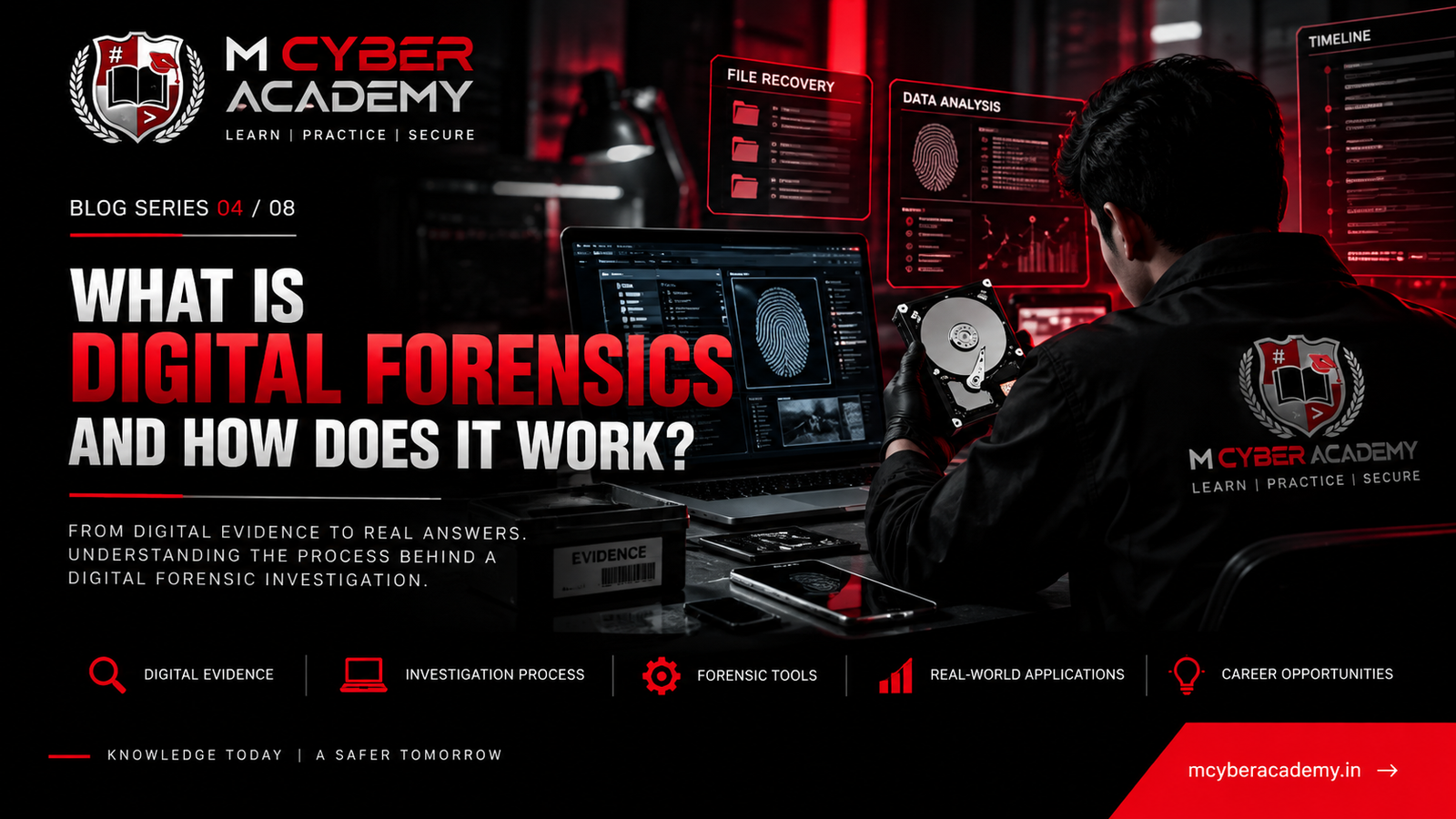
What Is Digital Forensics and How Does It Work?
Learn what digital forensics is, how investigators work with digital
evidence, the stages of a forensic investigation, common applications,
and the skills needed to build a career in digital forensics.
When a cyber incident happens, knowing that something went wrong is
only the beginning. Investigators may need to determine
what happened, how it happened, which systems were affected,
and what evidence can help explain the incident.
This is where
digital forensics
becomes important.
What Is Digital Forensics?
Digital forensics is the process of identifying,
preserving, collecting, examining and analyzing information from
digital devices and systems in a way that can help establish what
happened during an incident or investigation.
Depending on the investigation, the sources of evidence can include
computers, smartphones, storage devices, network data, cloud
environments, application logs and other digital systems.
The work is not simply about finding a deleted file or opening a
suspicious device. A digital forensic investigation also considers
how evidence was obtained, whether it was preserved properly,
what it shows, and how the findings can be documented clearly.
In simple words:
Digital forensics helps investigators examine digital evidence to
understand events, identify relevant activity and document findings
in a structured and defensible way.
Why Is Digital Evidence Important?
Digital evidence can provide useful information about activity that
took place on a device, application, network or account. Depending on
the source, investigators may examine files, metadata, timestamps,
logs, browser activity, system records and other relevant information.
However, digital evidence can be changed, deleted or damaged. This is
why investigators need to pay attention to
evidence preservation, documentation and integrity
throughout an investigation.
Finding digital evidence is only part of the job.
Preserving, examining and documenting it properly
is equally important.
How Does a Digital Forensic Investigation Work?
The exact process can vary depending on the investigation, organization
and type of evidence involved. A typical digital forensic workflow can
be understood through several connected stages.
Identify
Preserve
Collect
Examine
Analyze
Report
Identify: Find Relevant Sources
Investigators first determine which devices, systems, accounts,
logs or other digital sources may contain information relevant to
the investigation.
Preserve: Protect the Evidence
Evidence is handled carefully to reduce the risk of alteration or
loss. Documentation and appropriate preservation procedures are
important at this stage.
Collect: Acquire Data
Relevant information is collected using appropriate forensic
procedures and tools while maintaining records of what was
acquired.
Examine: Extract Information
Investigators examine the collected material to identify files,
artifacts, records, timestamps and other information that may be
relevant to the case.
Analyze: Connect the Findings
The evidence is analyzed to understand relationships, timelines,
activity and other findings that may help explain what occurred.
Report: Document the Results
Findings are documented clearly, including the methods used,
relevant evidence and conclusions supported by the examination.
Important:
Digital forensic work should be performed using appropriate
authorization, procedures and evidence-handling practices. The exact
workflow can differ depending on the type and purpose of an
investigation.
Where Is Digital Forensics Used?
Digital forensics can be useful wherever digital systems or devices
contain information relevant to an investigation. It is used in both
cybersecurity and broader investigative environments.
Cybercrime Investigations
Investigators may examine digital devices and online activity when
investigating suspected cybercrime.
Data Breach Investigations
Forensic analysis can help organizations investigate affected
systems, activity and potential indicators associated with a
security incident.
Incident Response
Forensic techniques can support investigations into malware,
unauthorized access and other security incidents.
Corporate Investigations
Organizations may use digital forensic methods when investigating
suspected misuse of systems, data or company devices.
Skills, Tools & Career Opportunities
A career in digital forensics requires more than knowing one forensic
software package. Professionals need a strong understanding of
operating systems, storage, networking, evidence handling and
investigative methods.
Operating Systems
Linux
Windows
File Systems
Networking
Log Analysis
Evidence Handling
Scripting
Documentation
Forensic Analysis
Depending on their specialization, professionals may work with forensic
imaging, file-system analysis, system artifacts, logs, memory data,
network information and other forms of digital evidence. The tools used
can vary according to the investigation and evidence source.
Digital Forensic Analyst
Examines digital evidence and helps investigate incidents,
suspicious activity and other cases involving digital systems.
Incident Response Professional
Helps organizations investigate and respond to cybersecurity
incidents while working to understand what happened.
Cybersecurity Analyst
Works across security monitoring, investigation and analysis, with
forensic knowledge supporting incident investigation.
Forensic Investigator
Applies digital investigation techniques to examine evidence and
document findings for appropriate investigative purposes.
Learning digital forensics?
Start with operating systems, file systems, networking and basic
cybersecurity concepts. Then move into forensic acquisition,
investigation techniques, evidence analysis and practical forensic
labs.
Frequently Asked Questions
What is digital forensics?
Digital forensics is the structured examination and analysis of
digital evidence from devices and systems to help understand
activity related to an investigation or security incident.
How does a digital forensic investigation work?
A typical investigation may involve identifying relevant sources,
preserving evidence, collecting data, examining artifacts,
analyzing findings and documenting the results. The exact process
depends on the investigation.
What is digital evidence?
Digital evidence is information stored or transmitted in digital
form that may be relevant to an investigation. Examples can
include files, logs, metadata, system records and other digital
artifacts.
Is digital forensics part of cybersecurity?
Digital forensics is closely connected to cybersecurity and is often
used during incident investigation and response. It is also used in
broader investigative and legal contexts.
What skills are needed for digital forensics?
Useful foundations include operating systems, file systems,
networking, evidence handling, log analysis, forensic analysis,
documentation and basic scripting.
Start Building Your Cybersecurity Skills
Explore practical cybersecurity learning with M Cyber Academy and
develop your understanding of ethical hacking, digital forensics,
cybersecurity tools and other security domains.